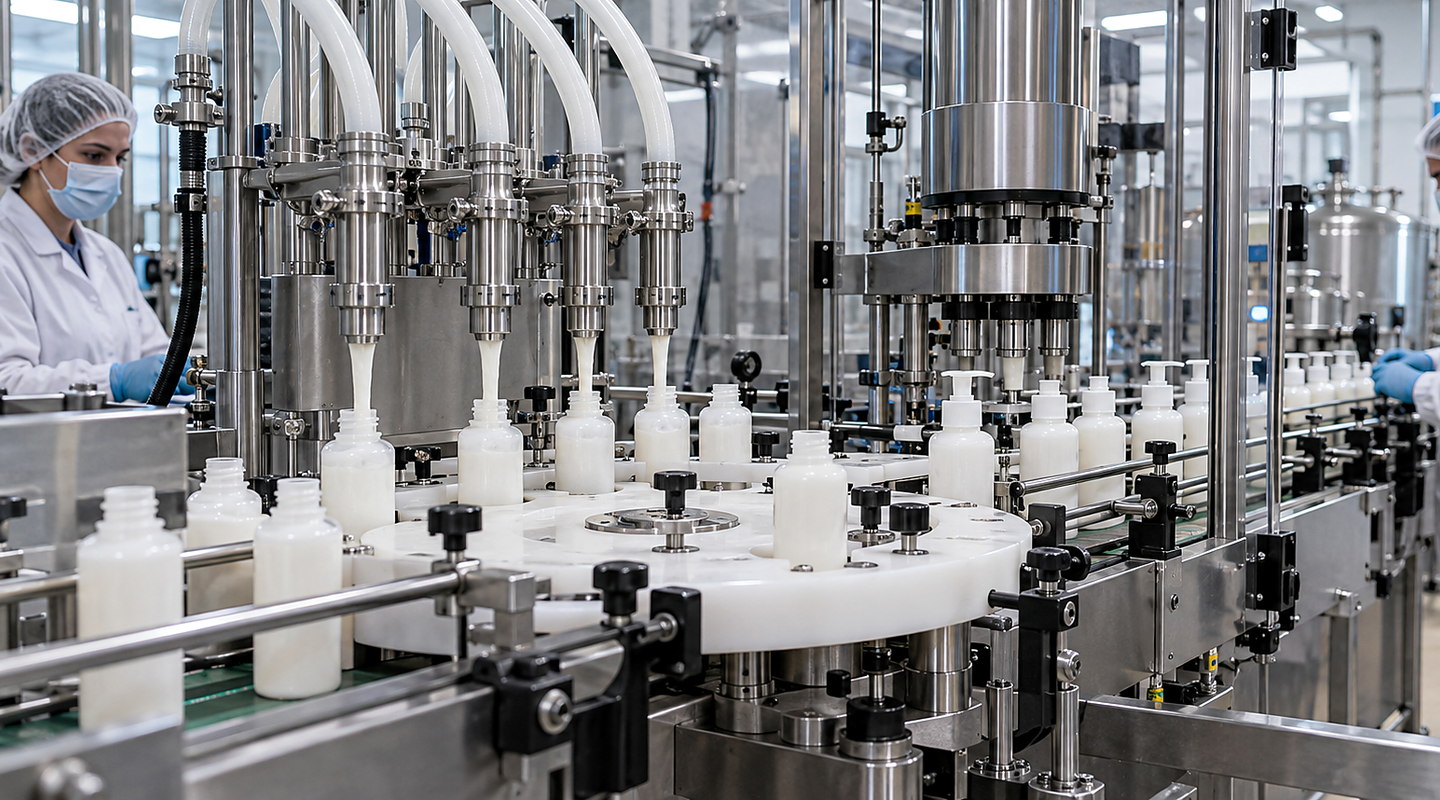
Essential Oil Bottling: How the Process Works
Plan essential-oil filling and capping with the actual oil, bottle, insert or dropper, fill quantity, clean cut-off, closure seating and changeover checks.
Trial the actual essential oil, bottle and complete closure together. Define the target fill and production pattern, review product-contact materials and cleaning suitability, and check fill quantity, clean cut-off and closure seating on completed bottles. Include inserts or droppers where used, normal interruptions and the changes between oils or formats.
Use the bottle and complete-closure guide and finished-bottle acceptance record. Confirm label position where included and keep product, hygiene, packaging and regulatory validation separate from equipment selection.
Understand the complete route from input to accepted output — Essential Oil Bottling
Plan essential oil bottling around your product, pack range, target output, cleaning needs and finished-pack checks. Discuss a practical line concept with Lancing using representative samples. Follow the material or part through each operating step and include recovery, cleaning and change in the real cycle.
Discuss your application

Four clear stages for essential oil bottling
At each stage, you can review how essential oil and product-contact requirements and finished-bottle checks and reject handling affect the next commitment.
- 01
Review Oil, Bottle and Complete Closure Samples
Provide the actual oils, bottle drawings and samples of the complete closures. Include inserts or droppers where used and identify the oil or format changes that the trial must cover.
- 02
Trial Filling and Capping Together
Trial filling and closing together with the actual samples. Agree how to check fill quantity, clean cut-off and closure seating before comparing the proposed methods.
- 03
Coordinate Transfers, Controls and Access
Define product supply, bottle presentation, transfers to closing and the required production pattern. Agree services, controls and access at each connection to the surrounding line.
- 04
Agree Filled-Bottle and Changeover Checks
Record the agreed filled-bottle checks and the response to an unsuitable result. Include cleaning, oil and bottle-format changes and the checks before production restarts.
Decisions and results stay connected
| Stage | What happens | What you can review |
|---|---|---|
| Review Oil, Bottle and Complete Closure Samples | Identify each oil, target fill, bottle drawing and complete closure assembly, including inserts or droppers where used. Include normal deliveries and the formats or products that create difficult filling or seating questions. | Dated sample and drawing list, product information, required fill range and unresolved contact-material or cleaning questions. |
| Trial Filling and Capping Together | Use the actual oil and complete pack to compare filling and closing. Agree the fill-quantity checks and review clean cut-off, bottle presentation and closure seating across the required range. | Trial conditions, quantity and closure results, rejected samples and the reason for recommending or ruling out an approach. |
| Coordinate Transfers, Controls and Access | Define product supply, bottle presentation, transfers to closing and surrounding line connections. Include the batch pattern, replenishment, stops, operator access and the finished-bottle checks in scope. | Agreed process layout, services and handovers, operator tasks, dependencies and excluded interfaces. |
| Agree Filled-Bottle and Changeover Checks | Check finished bottles after normal running, interruptions and agreed oil, bottle or closure changes. Record what must be cleaned, adjusted and checked before the next accepted run. | Fill quantity, cut-off, seating and included label-position results, unsuitable-bottle handling and changeover or cleaning observations. |
Keep connected responsibilities clear
Your final essential oil bottling scope must also account for cleaning and bottle-format changes, finished-bottle checks and reject handling, current regulations and the conditions at your site.
- The selected method must be trialled with representative product and packaging.
- Supplier tolerances and product-condition changes can alter handling or fill behaviour.
- Equipment selection does not replace product, hygiene, packaging or regulatory validation.