Understand your requirement
Identify each oil and its filling conditions, target quantities, bottle drawings and complete closures. Record product-contact and cleaning questions alongside the required production pattern.
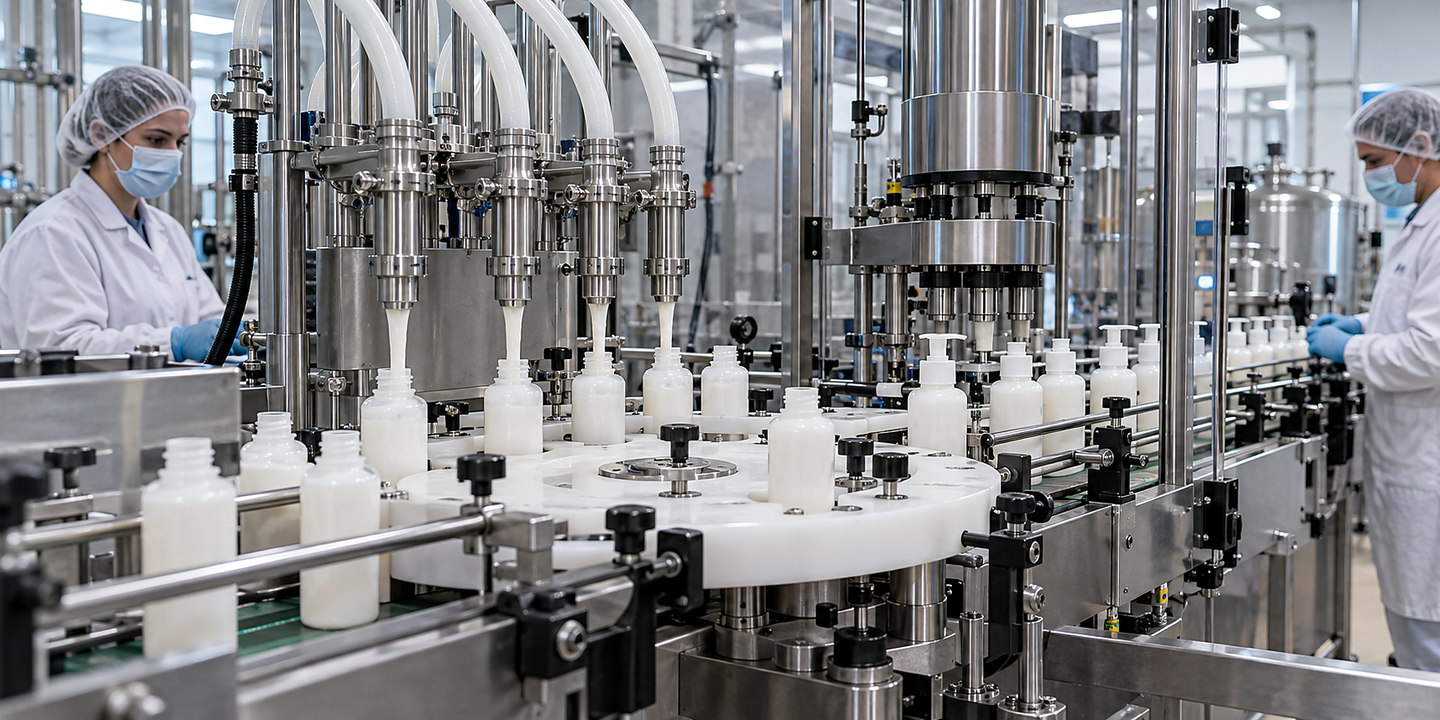
Compare essential-oil filling and capping approaches using actual oil, complete bottle and closure samples, batch patterns, cleaning needs and finished-bottle checks.
Compare essential-oil bottling proposals against the same oil, target fill, bottles and complete closures. Include inserts or droppers where used, how bottles reach filling and closing, and the cleaning and changeover pattern. Decide between simpler equipment and broader line integration using representative trials and complete-process requirements.
Use the supplier comparison questions and format and closure brief. A quoted filling rate does not, by itself, define accepted filled and closed bottles across the required range.
Plan essential oil bottling around your product, pack range, target output, cleaning needs and finished-pack checks. Discuss a practical line concept with Lancing using representative samples. When you compare solutions, check how each option handles essential oil and product-contact requirements, bottle and complete closure range and your surrounding line.
Discuss your application

Identify each oil and its filling conditions, target quantities, bottle drawings and complete closures. Record product-contact and cleaning questions alongside the required production pattern.
Trial filling and closing together using the actual oil and packs. Retain fill-quantity, cut-off and closure-seating observations, with reasons an approach is suitable or still needs investigation.
Define product supply, bottle presentation, transfers, services and operator access. Review replenishment, stops and format changes with the surrounding equipment and the tasks assigned to your team.
Agree finished-bottle checks and unsuitable-bottle handling, then record cleaning and changes between oils and formats. Retain the trial results, operating information and remaining responsibilities.
Typical support: line concept, trials, filling or packaging equipment, integration and handover.
| Approach | Often suitable when | Watch for |
|---|---|---|
| Essential Oil Bottling | A defined oil, fill range, complete pack and operating pattern need a coordinated filling-and-closing assessment. | Trial the actual oil and complete pack; define the finished-bottle checks and cleaning scope before selecting equipment. |
| Semi-Automatic Equipment for Lower-Volume or High-Changeover Work | The batch pattern, product mix and available operator tasks make a simpler route worth comparing. | Assess bottle and closure presentation, operator access, consistency and cleaning alongside complete-process output. |
| Fully Automatic Line Integration where Repeatable Container Flow and Rate Justify It | Stable bottle flow and the required production pattern justify reviewing broader line integration. | Include replenishment, transfers, fault recovery, cleaning and changeover dependencies, rather than relying on a headline rate. |