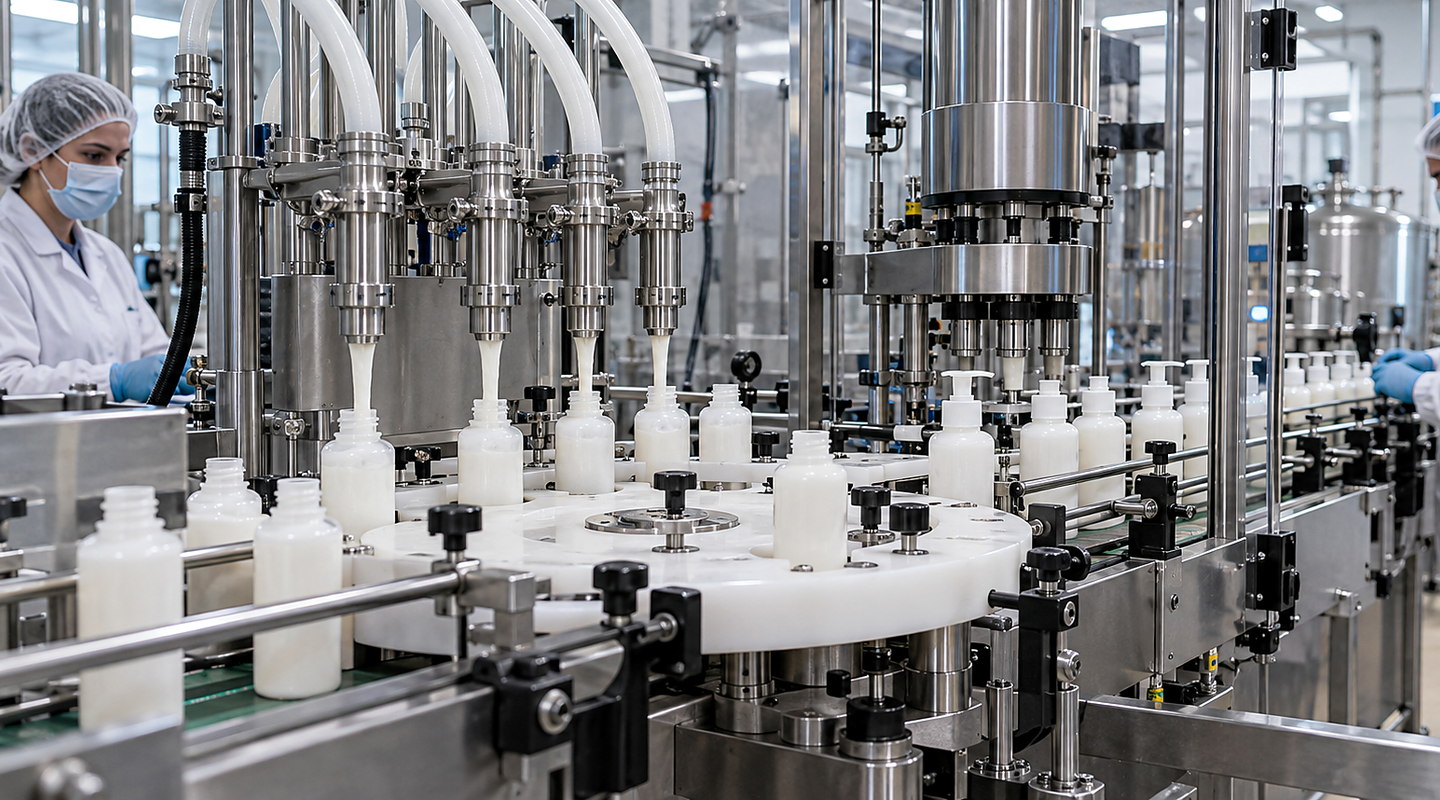
Essential Oil Bottling Selection Guide
Compare essential-oil bottling proposals on product-contact review, full closure samples, quantity checks, batch output, cleaning and accepted-bottle evidence.
Ask each supplier to assess the same actual oil, target fill and complete bottle-and-closure range. Compare product-contact and cleaning review, bottle presentation, clean cut-off and closure seating. Include inserts or droppers where used, normal stops, format changes and the agreed finished-bottle checks before choosing equipment.
Prepare the product and packaging checklist with the trial acceptance plan. Keep measured results, unproven assumptions and excluded line responsibilities visible in each proposal.
Compare options in the conditions where they must work — Essential Oil Bottling
Plan essential oil bottling around your product, pack range, target output, cleaning needs and finished-pack checks. Discuss a practical line concept with Lancing using representative samples. A useful shortlist should show how every option copes with essential oil and product-contact requirements and cleaning and bottle-format changes.
Discuss your application

Ask every supplier the same questions
| Decision | What to ask | What to check |
|---|---|---|
| Essential Oil and Product-Contact Requirements | How will the actual oil, filling conditions, product-contact materials and cleaning suitability be reviewed? | Product information, identified samples, documented suitability questions and trial observations; no material is assumed compatible. |
| Bottle and Complete Closure Range | Which bottle drawings, neck details, closures, inserts or droppers are included, and how will access and seating be trialled? | Representative complete packs from the required range, drawing revisions and format-specific filling and closing results. |
| Fill Quantity and Agreed Checks | What fill quantities and check method will be used, and how will unsuitable results be handled? | Agreed quantity-check and result records identified to the oil, bottle, closure and trial conditions. |
| Batch Pattern and Required Output | How does the proposed route handle the required batch pattern, replenishment and normal interruptions? | Accepted filled and closed bottles through the agreed operating sequence, with operator tasks and line dependencies stated. |
| Cleaning and Bottle-Format Changes | What must be cleaned, adjusted and checked when the oil, bottle or complete closure changes? | Recorded changeover observations and agreed checks before the first accepted bottles of the next run. |
| Finished-Bottle Checks and Reject Handling | How will quantity, clean cut-off, closure seating and label position where included be assessed together? | Accepted and unsuitable sample records, the agreed handling response and unresolved responsibilities. |
Include simpler approaches to essential-oil bottle filling and capping in your shortlist
| Approach | Often suitable when | Watch for |
|---|---|---|
| Essential Oil Bottling | A defined oil, fill range, complete pack and operating pattern need a coordinated filling-and-closing assessment. | Trial the actual oil and complete pack; define the finished-bottle checks and cleaning scope before selecting equipment. |
| Semi-Automatic Equipment for Lower-Volume or High-Changeover Work | The batch pattern, product mix and available operator tasks make a simpler route worth comparing. | Assess bottle and closure presentation, operator access, consistency and cleaning alongside complete-process output. |
| Fully Automatic Line Integration where Repeatable Container Flow and Rate Justify It | Stable bottle flow and the required production pattern justify reviewing broader line integration. | Include replenishment, transfers, fault recovery, cleaning and changeover dependencies, rather than relying on a headline rate. |
Pause before choosing when…
- Only perfect or hand-selected examples of routine production using essential-oil bottle filling and capping are available.
- No one has defined how finished-bottle checks and reject handling will be evaluated.
- The normal range for essential oil and product-contact requirements is described only as “usually fine” but has not been bounded.
- Your operator, cleaning, maintenance or recovery access has not been considered.
- Quoted performance depends on another machine or data source that is not included.