Current condition
Record the oil and sample condition, intended filling conditions and the method used to check quantity. Note what the trial shows about clean cut-off and the bottle neck before checking the complete closure.
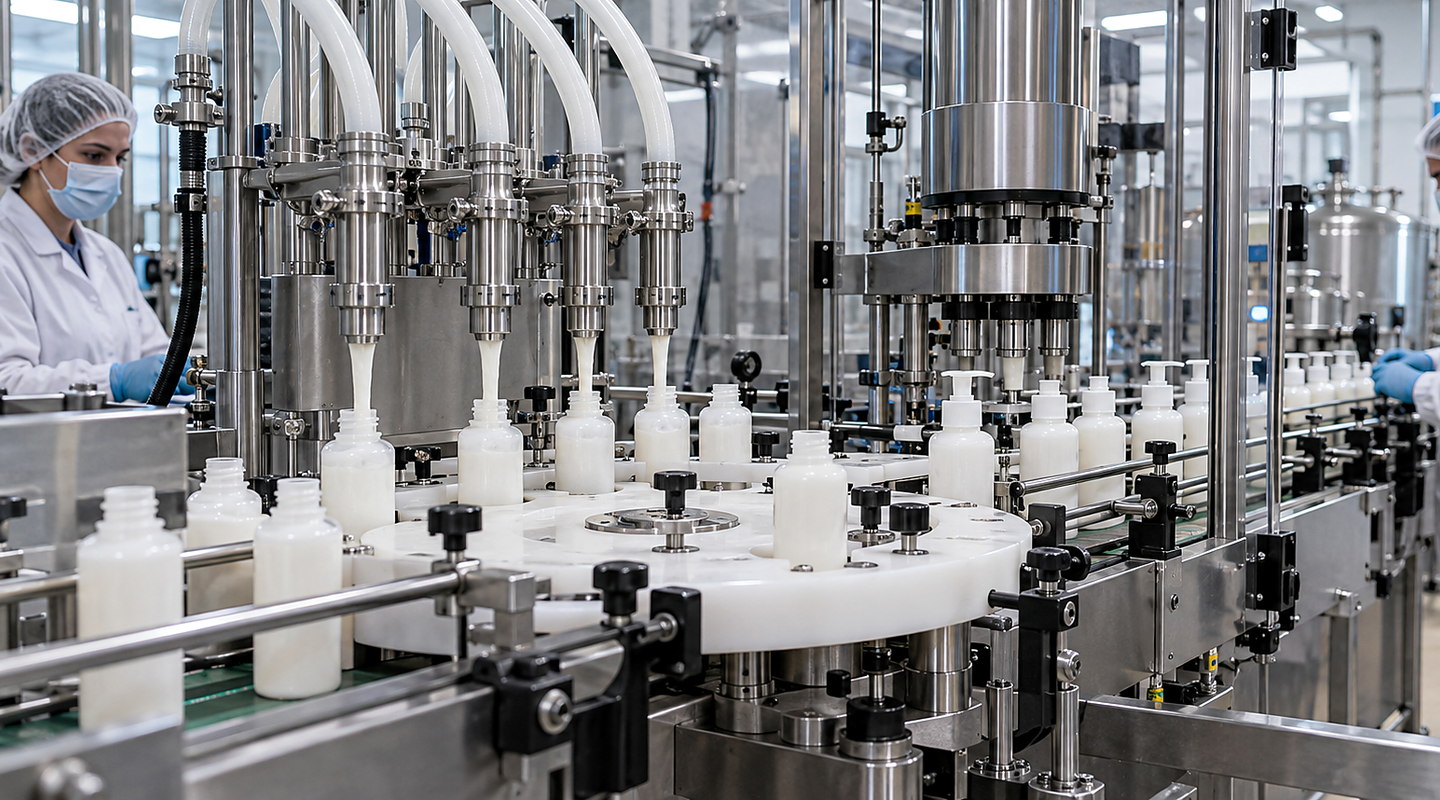
How should essential oil and product-contact requirements be investigated before specifying essential oil bottling?
Identify each oil and provide product data and the conditions at filling. Review product-contact materials and cleaning with the supplier, then trial the oil, bottle and complete closure together. Record fill quantity, clean cut-off and closure seating under the conditions agreed for the application.
For routine production using essential-oil bottle filling and capping, describe the realistic range and how changes in essential oil and product-contact requirements affect the result you need.
Plan essential oil bottling around your product, pack range, target output, cleaning needs and finished-pack checks. Discuss a practical line concept with Lancing using representative samples. Use this guide to resolve essential oil and product-contact requirements before it limits the final system.
Discuss your application

Record the oil and sample condition, intended filling conditions and the method used to check quantity. Note what the trial shows about clean cut-off and the bottle neck before checking the complete closure.
Include the oils, fill quantities, bottles and complete closures in the production brief. Identify which product changes, cleaning conditions and restarts need representative trials.
Show which settings, safeguards, maintenance tasks, decisions or required outcomes are affected by changes in essential oil and product-contact requirements.
Identify each essential oil and share product data and the conditions at filling. Ask how product-contact materials and cleaning suitability will be reviewed, then trial the actual oil rather than assuming every product behaves the same.
Send bottle drawings and samples with the complete closure assembly, including inserts or droppers where used. Review bottle presentation, access for filling and closure seating across the formats you need.
State the fill quantities and agree how they will be checked with the supplier. Include the range of bottles and a record of acceptable results; a nominal fill alone does not define the acceptance trial.
Describe batch sizes, production pattern and required output, including replenishment and stops. Ask what the complete filling and closing sequence must demonstrate; no equipment rate is assumed.
List the oil, bottle and closure changes, cleaning needs and operator access. Agree what must be cleaned, adjusted and checked before the first accepted bottle of the next run.
Agree checks for fill quantity, clean cut-off, closure seating and label position where included. State how unsuitable bottles are identified, handled and recorded before accepting the trial.